What Is GPS Fleet Tracking?
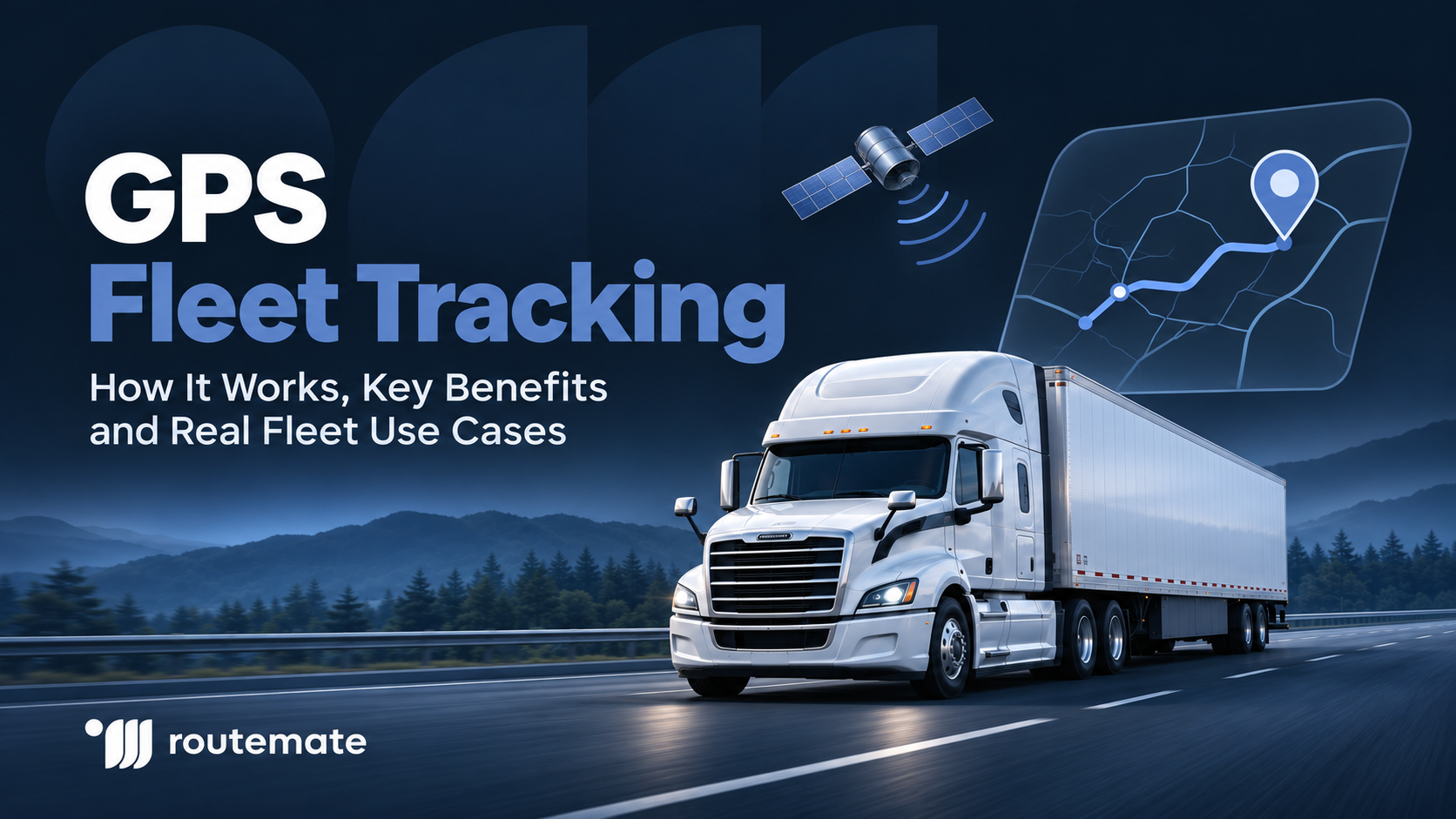
GPS fleet tracking is a system that uses satellite positioning and a small device in each vehicle to show where your fleet is, how it’s moving and what it’s doing in real time. The data flows to software where managers see a live map, get instant alerts and pull reports on trips, stops, speed and idling.
It works for anything that moves, from delivery vans and semi trucks to trailers, containers and heavy equipment. Unlike a driver’s phone, a dedicated tracker stays with the vehicle, runs on vehicle power and keeps reporting whether or not anyone is touching it.
How Does Fleet Tracking Work?
A tracker in the vehicle calculates its position from GPS satellite signals, then sends that location, along with speed and other data, over a cellular network to a cloud platform. The software turns it into a live map, alerts and reports, usually within seconds.
It starts with the tracker figuring out where it is. The device picks up signals from at least four satellites, measures how long each signal took to arrive and uses those distances to pinpoint its location. It repeats this constantly, so it always knows the vehicle’s position, direction and speed.
Next, the tracker sends that data over a cellular network to a cloud platform. Updates go out at a set interval, plus extra messages whenever something happens, like the ignition turning on or a driver braking hard. RouteMate’s GPS tracking updates as often as every 30 seconds, so the map you’re looking at stays close to what’s actually happening on the road.
Finally, the software turns all of that into something you can act on. You see your whole fleet on one screen, with driver names, vehicle IDs and current status. With real-time asset tracking, you can follow each truck and load as it moves, replay past trips to check stops and routes, and get notified the moment something looks wrong.
Technologies in Fleet Tracking
GPS technology
Satellites broadcast time-stamped signals, and the tracker uses the travel time from each one to calculate its position. GPS.gov notes it’s typically accurate to within about 16 feet under open sky, which is enough to tell which yard or dock a truck is sitting at.
Cellular connectivity
Each tracker has its own cellular link to send data to the cloud. When a vehicle drives out of coverage, most trackers keep recording and upload the stored data once the signal returns
Geofencing
Geofencing technology allows fleet managers to establish virtual boundaries around designated geographic areas. These boundaries automatically send notifications whenever a vehicle enters or leaves a specified zone. This feature helps fleet managers easily detect unusual vehicle activity, improving security and minimizing the risk of unauthorized vehicle use.
Sensors
Beyond location, trackers can report harsh braking, crashes, tampering and cargo conditions such as temperature, humidity and door status.
Benefits of Fleet Tracking Solutions
Fleet tracking solutions pay off by cutting fuel waste, speeding up theft recovery, lowering insurance costs and making drivers and deliveries more predictable. Across RouteMate fleets, GPS tracking has delivered a 20% increase in fleet efficiency, $2,000+ saved every month on route inefficiencies and 50% less time spent locating vehicles.
- Lower fuel costs: idle reports and route history show where fuel is being wasted and which drivers to coach.
- Faster theft recovery: CargoNet found the average value per theft rose to $273,990 in 2025, and geofence and tamper alerts tell you the moment a truck moves without permission.
- Lower insurance premiums: a SambaSafety report found 82% of commercial insurers now use telematics, and one in four fleets have seen lower premiums as a result.
- Safer driving: speeding and harsh braking alerts help you coach drivers early, and the same data protects good drivers in disputes.
- Accurate ETAs: when customers ask where their delivery is, you can answer in seconds instead of calling the driver.
Types of Fleet Tracking Devices
Fleet tracking devices differ mainly in how they’re powered and installed. Most fleets mix types, so look for a GPS fleet vehicle tracking system that manages all of them from one dashboard.
- OBD-II plug-in trackers connect to the diagnostics port and install in minutes, but drivers can easily unplug them.
- Hardwired and battery-mounted trackers connect to vehicle power out of sight, which makes them much harder to tamper with and a good fit for power units.
- Battery-powered asset trackers cover trailers, containers and equipment with no power of their own. RouteMate’s asset tracker runs for up to three years on one battery.
Industry-Specific GPS Fleet Tracking Applications
Trucking and logistics. Long-haul fleets use GPS tracking for fleet trucks to protect high-value loads, verify routes and give shippers and brokers accurate ETAs without a string of check calls.
Construction. Equipment spends nights and weekends on open job sites. Asset trackers and geofences flag any movement outside working hours, and one RouteMate construction customer used tracking to recover a stolen excavator.
Food and beverage. Refrigerated loads need more than a location. Temperature and humidity sensors show whether cargo stayed within range for the whole trip, and door alerts show when a trailer was opened.
Moving and delivery. Customers want to know when their delivery will arrive. Live location lets dispatchers update ETAs on the spot and reroute drivers around delays.
Data Analytics in Fleet Tracking
The real value of fleet GPS tracking comes from what you do with the data over time. GPS reports on trips, stops, mileage and idling show patterns across weeks and months, so you can fix the causes instead of reacting to single events.
Idling is a good example. The U.S. Department of Energy notes that a heavy-duty truck burns about 0.8 gallon of fuel per hour while idling, and diesel hit a record of more than $6.50 a gallon in September 2026. At a conservative $6 per gallon, cutting idling by one hour per workday saves about $1,200 per truck per year, roughly three times the cost of a $35 per month plan.
The same data also builds your case at insurance renewal. Travelers, for example, has offered up to 15% off certain auto liability premiums for fleets that use telematics well.
The Bottom Line
GPS fleet tracking shows you where your vehicles are, what they’re doing and where your money is going. With the right devices and reports in place, fuel savings alone can cover the cost several times over, before you count theft protection and insurance savings.
RouteMate GPS brings live tracking, geofencing, instant alerts and detailed reports together in one platform, whether you run 3 trucks or 300. Get pricing for your fleet or book a demo to see it in action.